Sleepypod Clickit Sport Plus Review: Is It Worth It for a Dog-and-Baby Back Seat?
Reader-supported — if you buy through our links we may earn a commission, at no extra cost to you. As an Amazon Associate I earn from qualifying purchases. Details
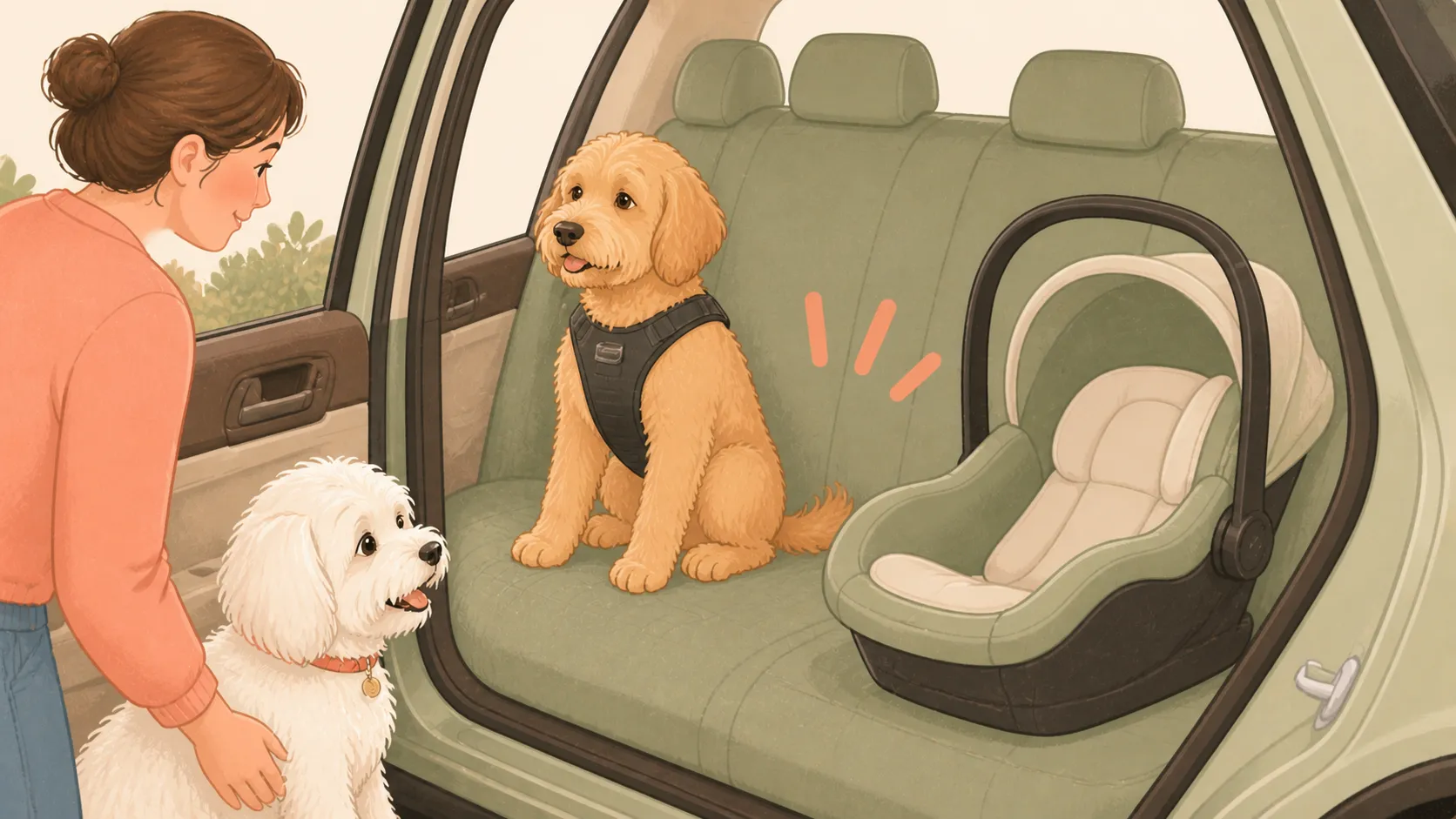
The Sleepypod Clickit Sport Plus costs more than many dog “seat belts,” and it takes more work to fit. Its case rests on one fact: the Clickit Sport earned an independent five-star certification from the Center for Pet Safety. For a dog riding within reach of an infant seat, verified containment matters more than a convenient buckle or a low price.
That does not make it universal. It is designed for dogs roughly 18–90 pounds, it needs a dedicated vehicle seating position, and owners commonly need a learning session before the straps and seatbelt routing feel routine. If those limits fit your household, the premium buys unusually strong evidence. If they do not, a different certified Sleepypod format may be the better answer.
We have not crash-tested or personally used this harness. This review is based on the current Sleepypod specifications, independent certification, a verified U.S. listing for the Small/Jet Black variant, and recurring owner feedback. We treat brand claims as brand claims and laboratory certification as separate evidence.
The car illustrations are non-instructional layout concepts and intentionally omit connection hardware. Always follow all three current manuals: Sleepypod, child restraint, and vehicle.
What the Plus package includes
The current Sleepypod product page lists the Clickit Sport Plus from $103.49 for Small; current direct prices rise to $109.24 for Medium, $120.74 for Large, and $126.49 for XL. “Plus” refers to the bundle: the padded Clickit Sport harness comes with Sleepypod’s S-Clip and Buckle Shield accessories. The harness uses the company’s continuous Infinity Loop webbing with a broad energy-absorbing vest and three points of contact intended to reduce forward and lateral movement in a sudden stop or collision.
It connects to a vehicle seatbelt, rather than a leash clipped to a single back ring. That difference is important. A short tether can still let a dog rotate or strike the seat ahead, and a walking-harness attachment was not necessarily designed for crash loading. The Sport’s load path is the product.
Outside the car, Sleepypod permits it as a walking harness and adds reflective strips. Care is simple but not washing-machine simple: the company says to wipe the vest front with a damp, soapy cloth and vacuum fur from the neoprene back.
What “five-star certified” adds
Sleepypod says the Sport was tested at 30 mph to U.S. FMVSS 213, Canadian CMVSS 213, and European ECE R44 child-restraint standards. More importantly, the Center for Pet Safety certification is independent of the manufacturer and awarded the model its highest five-star rating.
That does not promise that no dog can be injured in any crash. Vehicle direction, impact speed, dog anatomy, fit, and surrounding objects still matter. It does mean the restraint has cleared a published third-party benchmark—a much higher bar than an unsupported “crash tested” badge.
Sleepypod also lists the harness as eligible for its Crash Replacement Program. Read the current terms before treating that as insurance; programs and eligibility can change.
The dog-and-baby back-seat fit
The practical advantage is separation. The dog occupies one seating position and the Sport uses that position’s seatbelt. The infant seat occupies another position and follows its own vehicle and car-seat manuals. If the infant seat uses lower anchors, the dog harness does not need to take them over; if the infant seat uses a seatbelt installation, each passenger still needs a separate belt position.
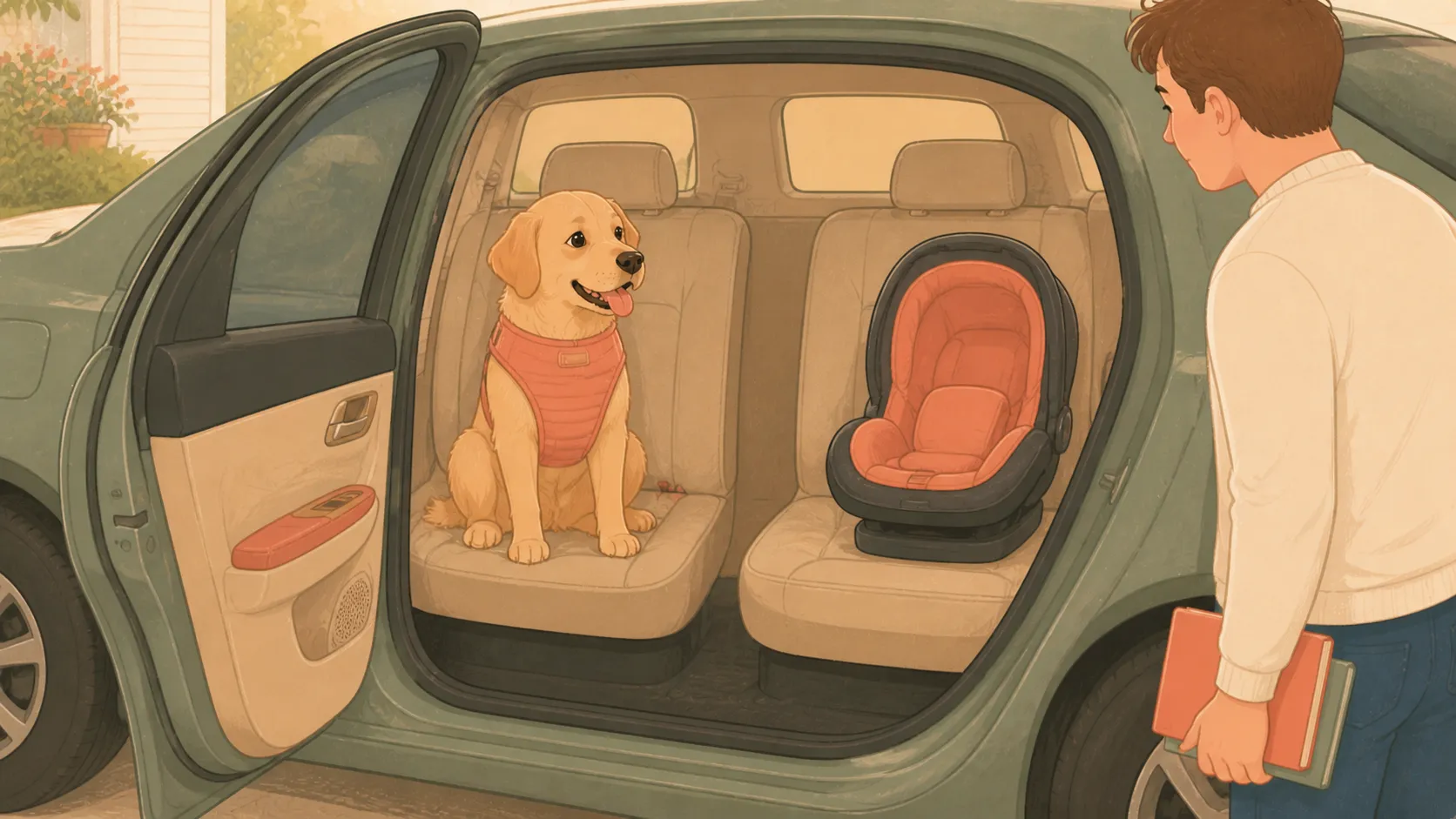
Layout concept only—not installation guidance. Follow the current Sleepypod, child-restraint, and vehicle manuals for every connection and seating position.
Do not translate that into “fits every back seat.” A large dog beside a wide rear-facing seat may simply exceed the bench width. Buckles can be buried by neighboring seats, and the child-seat shell must not be pushed sideways by the dog or harness hardware. Install the infant seat first, confirm it is secure by its manual, then assess whether the dog has a full, unobstructed position. In a narrow car, the honest solution may be a different row, a carrier or restraint configuration explicitly allowed by its manufacturer and compatible with the vehicle manual, or separate trips—not compressing both passengers into one-and-a-half seats.
The Buckle Shield is useful in this exact household because it helps prevent an accidental press on the vehicle buckle. The S-Clip manages seatbelt geometry. Both require reading the Sleepypod instructions; neither is a reason to improvise around a child restraint.
Fit is the make-or-break issue
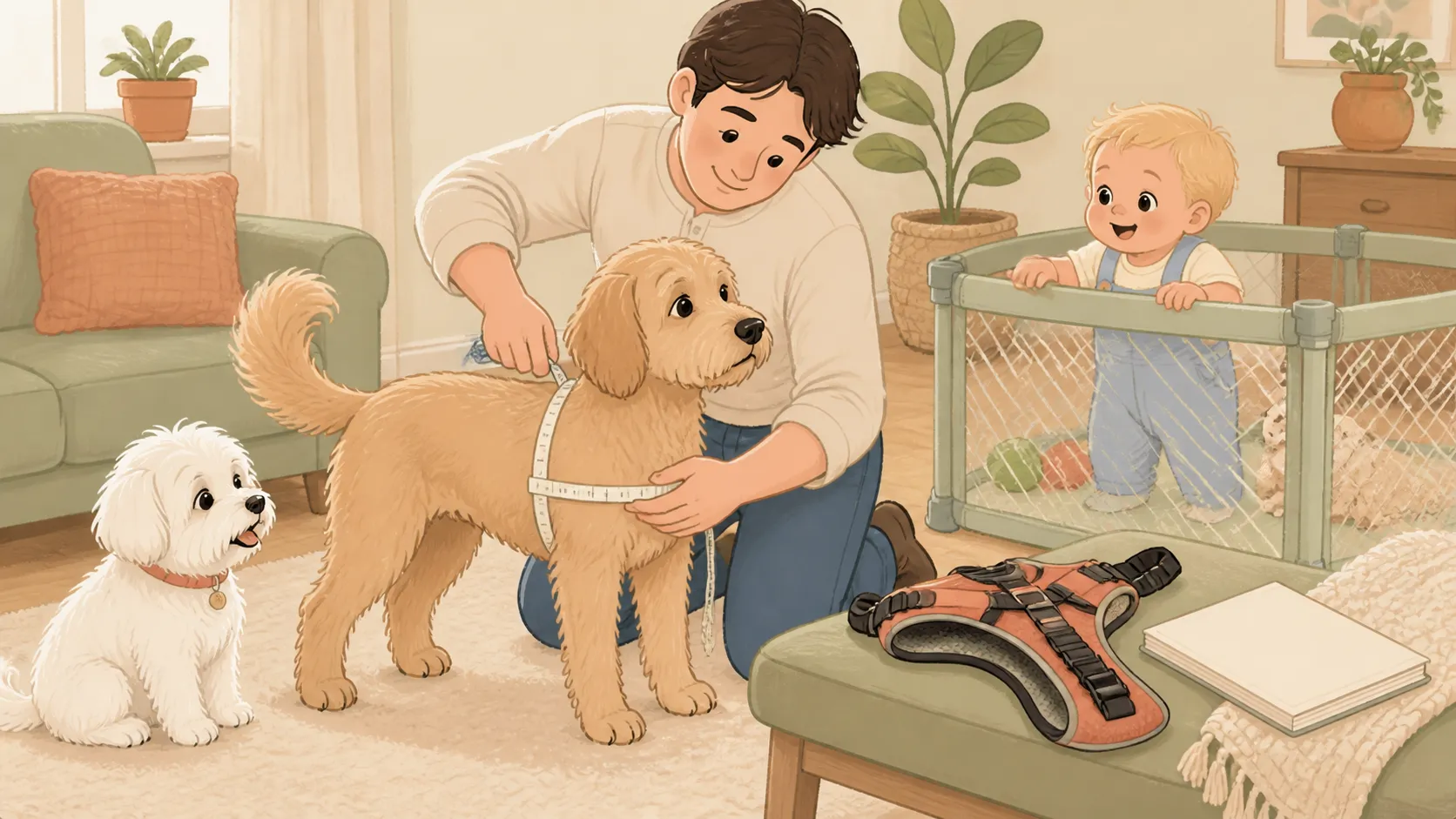
Sleepypod’s current comparison chart recommends Sport Plus for dogs 18–90 lb. Rib-cage ranges are 16.5–22 inches (Small), 22.5–28 (Medium), 28.5–34 (Large), and 34.5–40 (XL). Those gaps are narrow enough that “my dog usually wears Medium” is not a measurement.
Owner feedback repeatedly returns to the same two caveats: the first adjustment is fiddly, and dogs with unusual proportions can land between sizes. Deep, narrow chests and long bodies are common trouble cases. Buy from a seller with a workable return path, fit it indoors before the return window closes, and confirm that the vest lies centered while the dog can sit and lie down without slipping a shoulder free.
Very small dogs are a separate issue, not a size-down challenge. Sleepypod says dogs below about 17–18 lb tend to have more fragile bone structure, and its product range directs pets up to 18 lb toward crash-tested carriers. A typical Maltese should not be put into an oversized Sport merely because this is the site’s featured mascot.
Daily-use friction
This is not a one-click tether. The first setup asks you to adjust the vest to the dog, learn the belt routing, place the S-Clip correctly, and keep the belt from twisting. Owners who like it tend to say the routine becomes manageable once fitted; owners who dislike it often describe the initial process as confusing or too cumbersome for an uncooperative dog.
That matters because the safest harness is useless in the trunk. Practice on a calm day without the baby waiting in the car. Reward the dog for stepping in, standing for adjustment, and settling in the vehicle. Leave enough departure time that you never choose between correct routing and getting to an appointment.
Who should buy it
The Clickit Sport Plus makes sense for an 18–90 lb dog whose rib-cage measurement fits the chart, a vehicle with a genuine separate seat position beside the infant restraint, and an owner willing to learn the setup. In that case, the starting price of $103.49 is buying independent certification, a deliberate three-point restraint, and included belt-management accessories; larger sizes currently cost more.
Skip it for most dogs under 18 lb, dogs over 90 lb, or a back seat that cannot give the dog its own space. Compare Sleepypod’s certified carriers for small pets and its newer Clickit Range line for larger or differently proportioned dogs. Our broader crash-tested dog harness guide explains those categories; this review’s narrower conclusion is that the Sport Plus is worth its premium only when its size and installation rules genuinely fit your car.
Sources consulted
- Sleepypod Clickit Sport Plus: current specifications, price, and instructions
- Sleepypod car-harness comparison and size chart
- Center for Pet Safety: certified products
- Verified U.S. Amazon listing for the Small/Jet Black variant, ASIN B08JQQWKYL
Last verified: August 28, 2026.
At a glance
Sleepypod Clickit Sport Plus Crash-Tested Harness — Small, Jet Black
What stands out
- Independently earned the Center for Pet Safety five-star rating rather than relying only on a manufacturer crash-test claim
- Three-point seatbelt design and broad padded vest are intended to limit forward and sideways motion
- Includes the S-Clip and Buckle Shield, and can double as a walking harness outside the car
Things to know
- The Sport Plus range is recommended for dogs about 18–90 lb, so it is not the right restraint for most very small dogs
- Owners repeatedly describe the first fitting and car setup as less intuitive than an ordinary walking harness
- Deep-chested and between-size dogs may need an exchange; correct rib-cage measurement matters more than the usual label size
Questions families actually ask
Is the Sleepypod Clickit Sport Plus actually crash tested?
Yes. Sleepypod publishes sled testing to U.S., Canadian, and European child-restraint standards, and the Clickit Sport earned an independent five-star rating from the Center for Pet Safety. That independent certification is the meaningful distinction from products that only say “crash tested” in marketing.
Can it share a back seat with a rear-facing infant seat?
It can use the seatbelt in the dog’s own seating position while the baby seat uses its approved installation in another position. Compatibility still depends on the vehicle, dog size, and child-seat installation; neither passenger should borrow hardware or space from the other. Check both manuals and keep a clear gap.
What dogs fit the Clickit Sport Plus?
Sleepypod recommends the Sport Plus line for roughly 18–90 lb, with rib-cage ranges from 16.5–22 inches in Small through 34.5–40 inches in XL. Measure the rib cage and use the current size guide. Dogs under about 18 lb generally belong in an appropriate crash-tested carrier, while dogs above 90 lb should be compared with Sleepypod’s Range line.
Can my dog wear it for walks?
Sleepypod says it can be used as a walking harness and adds reflective strips for visibility. It is bulkier and more structured than a light everyday harness, so the main reason to buy it remains vehicle restraint, not all-day wear.