Introducing Your Dog to Your Newborn: The First Two Weeks
Reader-supported — if you buy through our links we may earn a commission, at no extra cost to you. As an Amazon Associate I earn from qualifying purchases. Details
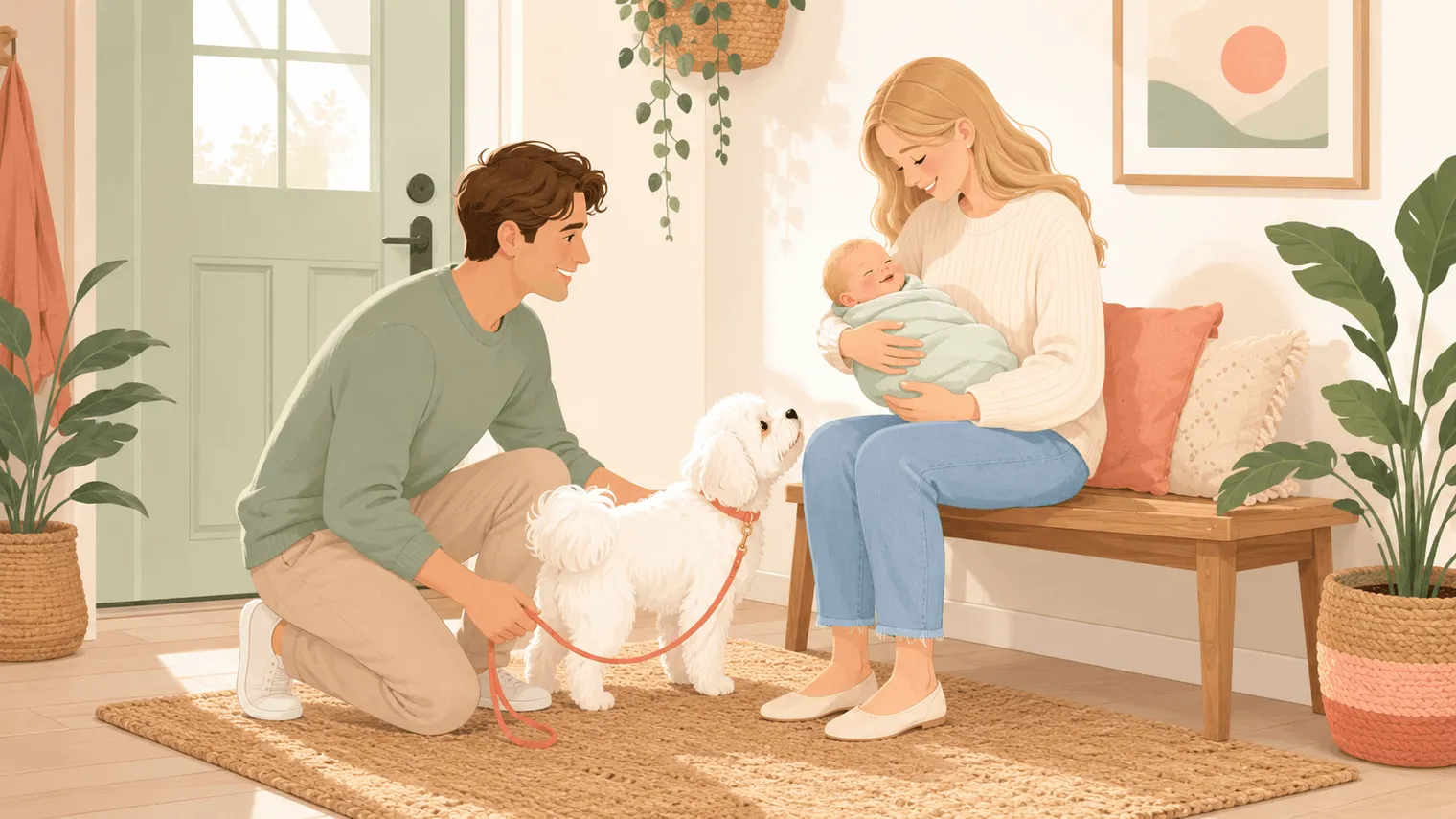
Somewhere around the third trimester, every dog owner has the same 2 a.m. thought: what if the dog hates the baby? Take a breath. Dogs have been absorbing new humans into their packs for roughly fifteen thousand years. Your job isn’t to engineer a friendship — it’s to run a calm, boring, slightly repetitive script for two weeks. Boring is the whole strategy.
A note on what this guide is: practical preparation for a normal, well-socialized family dog. If your dog has a bite history, guards resources, or has ever shown aggression toward children, bring in a certified professional (look for CAAB, DACVB, or KPA credentials) before the due date — that’s not a DIY situation, and there’s no shame in the referral.
Before the hospital: rig the game
Shift the routine early. Whatever will change — walk times, who feeds, which rooms are open — change it weeks before the baby arrives, so the dog never connects the downgrade to the newcomer. A dog who lost sofa privileges the day the baby came home knows exactly who to blame.
Make the nursery boring. Let the dog explore it supervised, then establish the rule you’ll actually enforce: in with permission, never alone. A gate with a clear view beats a closed door, because a door creates mystery and mystery creates scratching.
Play the soundtrack. Newborn cries on a speaker, quietly at first, during meals — volume up over days. Dogs who’ve heard a hundred fake cries barely flag the real one. (The reverse trick, masking the dog’s noise for the baby, is its own piece of gear.)
Stock the freezer. Lick mats and stuffed Kongs are about to become your co-parents. The feeding-time routine works best if the dog already loves it before the baby exists.
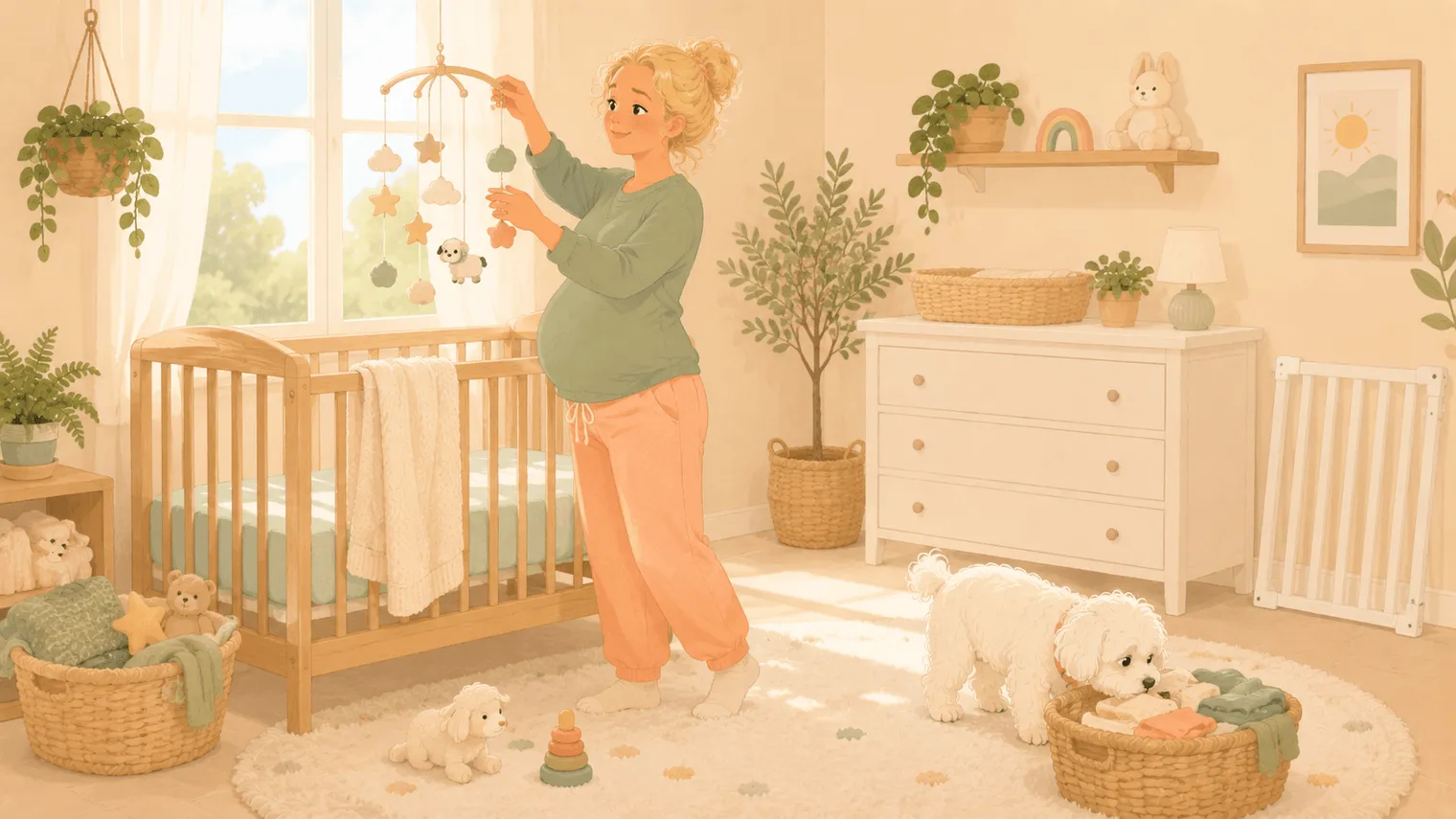
Day one: the front-door scene
The classic mistake is making the introduction a ceremony. Aim for the opposite — a normal homecoming that happens to include a baby.
- Someone greets the dog first, baby-free. Whoever the dog missed most walks in alone and burns off the reunion zoomies. The baby enters after the party, not as the party.
- Leash on, even indoors. Not because you expect trouble — because a leash converts “hope he behaves” into “we’re fine either way.”
- Let the dog approach, not the reverse. Baby in arms, seated, calm. A few seconds of foot-sniffing, quiet praise, then casually move on. Short and anticlimactic is the goal.
- End on nothing. No discipline, no flood of treats, no drama. The lesson of day one is: this is normal now.
The fourteen-day script
Baby present = good things happen. Treats, sniff-walks, and attention flow when the baby is in the room, not only when the baby naps. The classic trap is the reverse — ignore the dog while the baby’s awake, apologize with affection during naps — which teaches exactly the wrong math.
Supervise like a lifeguard, not a helicopter. Same room, eyes up, calm. Never leave the dog and baby alone together, even a model citizen, even for the length of a doorbell. That’s not distrust of your dog; it’s the standard every behaviorist sets, and it’s non-negotiable for years, not weeks.
Read the early whispers. Dogs almost never go from fine to not-fine in one step — there’s a vocabulary of lip-licks, yawns, and turned heads that comes first. We wrote a full guide to that body language; the two-week window is when reading it matters most.
Keep the dog’s wins on the calendar. One real walk, one play session, one chew project per day, even in survival mode. A dog whose needs are met has no grievance to file. If your dog leans anxious by nature, there’s more you can layer on.
What success looks like
Two weeks in, the win condition isn’t a viral photo of the dog guarding the crib. It’s a dog who sighs, flops down two meters from the bouncer, and takes a nap — unbothered, unimpressed, fully informed. Indifference first. The love story, if it comes, writes itself around month eight, when the small human starts flinging puffs off the high chair and the dog realizes this was all an excellent idea.
Questions families actually ask
Should I let my dog sniff my newborn?
Yes — controlled, brief, and on leash. Sniffing is how dogs file new family members, and forbidding it entirely just builds frustrating mystery around the baby. Let the dog sniff feet (not face) for a few seconds, praise calm behavior, and end the session while it's still going well.
Can I bring a blanket home from the hospital first?
It can't hurt and it might help: a blanket with the baby's scent, presented calmly at home a day early, makes the real arrival less novel. Just don't expect magic — it's one small data point for the dog, not a formal introduction. The behavior around the blanket also gives you a preview of your dog's excitement level.
When should I start preparing my dog — and is it too late if the baby is already here?
Ideally a month or more before the due date: routine changes, nursery access rules, and baby sounds all land easier without an actual baby in the house. Already home with the baby? Not too late — the same steps work, you'll just run them in parallel with the newborn chaos. Dogs adapt; they just adapt faster with a script.
My dog completely ignores the baby. Is that bad?
It's wonderful. Indifference is the goal, not friendship — a dog who treats the baby as boring furniture is a dog with no anxiety about it. The Instagram-cute bond often arrives later, on the dog's schedule, usually around the time the baby starts dropping food.