Hot Pavement and Dog Paws: A Summer Safety Guide (2026)
Reader-supported — if you buy through our links we may earn a commission, at no extra cost to you. As an Amazon Associate I earn from qualifying purchases. Details
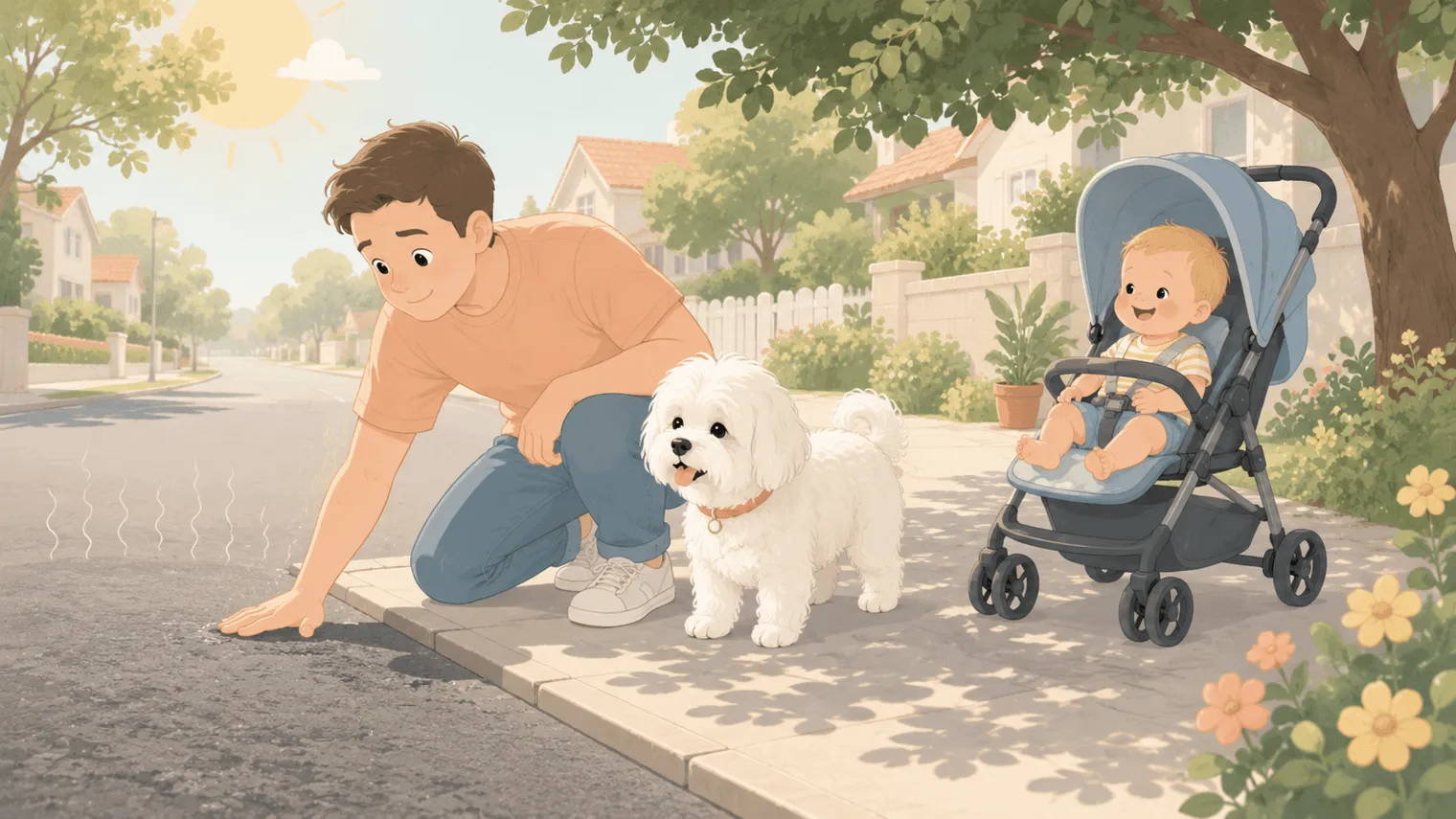
Summer turns a familiar sidewalk into a hot plate. The first job of this guide is not to sell you anything — it is to keep your dog off pavement that can scorch a pad, because the best gear in the world is no substitute for not walking on a griddle. Then, for the times you do head out in the heat, we cover the gear owners actually reach for: two sets of boots and one lick-safe wax.
Quick disclosure: we have not put these on a dog ourselves. What follows is pulled from the manufacturers’ spec sheets and the patterns running through owner reviews, alongside published vet guidance on heat and paws. Where owners and a spec sheet tell different stories, we flag it.
The 7-second test comes first
Before any boot or balm, learn the test that prevents the injury: press the back of your hand flat to the pavement. If you can not keep it there for seven seconds, it is too hot for your dog — a widely used rule of thumb that a vet practice spells out the same way. The reason it surprises people is that asphalt runs dramatically hotter than the air — the AKC notes that when the air is 86 degrees the asphalt can hit 135, well past the point a dark surface can blister and burn a pad. If it is too hot for your hand, it is too hot for your dog.
So the real first move is timing and terrain, not shopping. Walk in the early morning or after the sun drops, and route along grass, dirt, and shade. In a dog-and-baby household that also solves a second problem: the cooler hours are gentler on a stroller-bound baby too, and you are not fighting heat on two fronts. If your whole summer plan is heat management, our keep-the-dog-cool guide covers the body, not just the feet.
Know the warning signs, because a pad burn can show up after the fact — and the AKC notes hot pavement can blister and burn paw pads. Watch for the signs of a burned pad: limping, licking or chewing at the feet, pads that look darker than usual or blistered, or refusing to walk. Any of those after a warm walk is a reason to call your vet — and no, we do not do paw-burn first aid by blog. Ask your vet.

Which one for whom
- Premium summer-specific boots — Canada Pooch Hot Pavement Boots. Breathable mesh built for heat, if you size them carefully.
- Best value, all-season boots — QUMY Dog Boots. Cheaper, eight sizes, reflective straps for dusk walks.
- For the dog who refuses boots — Musher’s Secret Paw Protection Wax. Lick-safe, baby-floor-friendly, but a thin barrier, not a boot.
How we chose
We compared the spec sheets against the owner-review patterns; we have not field-tested any of it. The things that decide this small category: how well the protection actually holds up to summer heat, how easily a dog accepts wearing it, whether sizing is forgiving, and — for a home with a crawler — what ends up on the floor afterward.
Canada Pooch Hot Pavement Boots: the summer specialist
These are the heat-season pick by design: a breathable mesh upper over a flexible anti-slip rubber sole, with drainage holes that make them water-friendly (though, per the spec sheet, not waterproof). The closure is the part owners praise for daily life — a wide opening plus a dual toggle-and-velcro system that owners say makes them genuinely easier to get on and better at staying put than the fiddlier boots they have tried. The sock-like feel is one many dogs settle into after a short adjustment, owners report, and the most consistently praised benefit is simple: they protect paws on hot pavement.
The honest notes, all from owners: sizing is the recurring headache — measure paw length including nails plus width, because they run small and inconsistent. Some owners report tearing after a few uses, so durability varies. And a few mention the boots can shift out of position, the design can catch a dew claw, and the grip is weak on indoor floors. They are machine washable, which helps after a dusty park loop.
QUMY Dog Boots: the value all-rounder
If the Canada Pooch is the specialist, the QUMY is the generalist on a budget: a set of four, eight sizes that reach up to large dogs, a rugged molded anti-slip sole, and a wide split-seam opening owners find easy to manage. Two velcro straps carry reflective accents — a real plus for the dusk stroller walks that summer heat pushes you into, and a natural companion to the stroller-walk how-to. Owners report solid protection not just on hot pavement but on ice, snow, and rough trail, which is what earns it the all-season label.
What owners flag: the velcro and reflective straps are the weak point, tending to fray or peel over months of use. The Amazon listing describes them as water-resistant rather than waterproof, and owners say water can seep through the stitching. Sizing again runs tight and finicky — measure all four paws, since many dogs are not symmetrical — and breathability is limited, so owners note paws can get warm inside. Fasten them snugly or they can slip off.
One thing both boots share, straight from owners: the first time most dogs wear boots, they do the comical high-step march, and some need real acclimation before they walk normally. A few never accept boots at all. Practice indoors with treats before the heat arrives — which is the perfect segue to the no-boots option.
Musher’s Secret Paw Protection Wax: the boot refuser’s friend
For the dog who treats boots like an insult, wax is the workaround. Musher’s Secret is a food-grade blend of beeswax, carnauba, and candelilla, plus vegetable oils and vitamin E — labeled lick-safe, non-toxic, and edible, with no tea tree oil and no petroleum. That last detail earns it a spot in a crawling-baby home specifically: your dog will lick its feet, your baby will plant a hand on the same floor, and the ingredient list is one you can actually live with. It is semi-permeable, so the pad still breathes, and you apply a thin coat a couple of times a week.
Owners say it does real work — buffering pads against hot pavement, ice, and salt, cutting down on snow-balling, and conditioning dry, cracked pads back to health within days. A little goes a long way, and one jar lasts a long time, which makes the value easy.
The honest framing, owner-attributed: it can feel greasy and leave waxy footprints if you over-apply, it is fiddly to spread on a squirmy dog, and — most importantly — it is not permanent. It wears off and needs reapplying, and owners feel it underperforms boots for heavy road salt or extreme heat. Think of it as a thin barrier and pad conditioner, not a replacement for boots on the worst midday asphalt.

The dog-and-baby angle no product page mentions
Hot-weather walks with both a dog and a baby create their own small chaos. Picture the door: you are juggling a car seat in one hand and a leash in the other, and that is the exact moment a dog with summer energy tries to door-dash onto the very pavement you are trying to avoid. A hands-free setup keeps the leash on your body instead of dropping it to wrestle the car seat — our hands-free leash guide gets into that.
Then there is the floor. Boots that grip poorly indoors and wax that prints before it absorbs both end up where your crawler lives. The fix is simple: pull the boots at the door and give wax a few minutes to soak in before the baby is loose on the same tile. And the burn signs above are easy to miss when you are also tracking nap schedules — so build a ten-second paw check into the post-walk routine, same as you would wipe down a stroller.
Put plainly
If you can avoid the heat, avoid it — the 7-second test and an early-morning walk beat any gear here. When you do head out in summer, owners are happy with the Canada Pooch for heat-specific protection if you nail the sizing, reach for the QUMY when budget and all-season use matter, and keep Musher’s Secret on hand for the dog who refuses boots and the floor a baby shares. None of it replaces the shade and the timing; it just buys you the walks you still have to take.
Our picks at a glance
Canada Pooch Hot Pavement Boots
What stands out
- Owners say the breathable mesh works well as summer hot-pavement protection — the benefit they praise most
- The sock-like feel is one many dogs accept after a short break-in, owners report
- Owners note the wide opening plus dual toggle-and-velcro closure makes them easy to get on and helps them stay put
Things to know
- The most common complaint in owner reviews is sizing — measure paw length including nails plus width
- Owners report some tearing after a few uses, so durability varies
- Owners mention they can shift out of place, can catch a dew claw, and grip poorly on indoor floors
QUMY Dog Boots
What stands out
- Owners report effective protection across hot pavement, ice and snow, and rough terrain
- The wide split-seam opening makes them easy on and off, owners say
- Owners like the molded anti-slip sole and reflective straps for dusk walks
Things to know
- Owners report the velcro and reflective straps fray or peel over months of use
- The Amazon listing describes them as water-resistant rather than waterproof, and owners say water can seep through the stitching
- Owners note sizing runs tight and finicky and breathability is limited, so paws can get warm
Musher's Secret Paw Protection Wax
What stands out
- Owners say it genuinely buffers pads against hot pavement, ice, and salt and cuts down snow-balling
- Owners report it conditions and helps heal dry, cracked pads within days
- A little goes a long way and one jar lasts a long time, owners note
Things to know
- Owners say it can feel greasy and leave waxy footprints if you over-apply
- It can be fiddly to apply on a wiggly dog, owners report
- Per owners it wears off and must be reapplied, and underperforms boots in heavy salt or extreme heat
Questions families actually ask
How hot is too hot for a dog to walk on pavement?
If you can not hold the back of your hand on the pavement for seven seconds, it is too hot for your dog to walk on. Asphalt runs far hotter than the air, so a pleasant-feeling afternoon can still cook a pad. In a dog-and-baby summer, the simplest fix is timing — early morning or after sundown, on grass and shade.
What are the signs of a burned paw pad?
Watch for the signs of a burned pad: limping, licking or chewing at the feet, pads that look darker than usual or blistered, or refusing to walk. Any of those after a warm-weather walk is worth a vet call rather than a wait-and-see. Pads can blister hours later, so check them when you get home, not just on the walk.
Do dog boots or paw wax work better for hot pavement?
Boots give the most complete barrier, but only if your dog tolerates them and you size them right. Wax is the boot-alternative for dogs who refuse footwear — owners describe it as a thin protective layer and pad conditioner rather than a full shield. For the worst midday asphalt, owners lean boots; for everyday outings on a dog who hates boots, wax earns its place.
Is paw wax safe if my dog licks it — or my crawling baby touches the floor?
Musher's Secret is a food-grade beeswax blend that is labeled lick-safe and non-toxic, with no tea tree oil or petroleum. That matters in a home where a dog licks its feet and a baby plays on the same floor. It can still leave a waxy print before it absorbs, so give it a few minutes after applying.
My dog walks funny in boots the first time — is that normal?
Yes — the high-stepping "robot walk" is the classic first-boots reaction and usually fades with short, upbeat practice sessions indoors. Some dogs never make peace with boots, which is exactly why wax exists as a backup. Either way, do the acclimation before you actually need the protection, not on a 95-degree afternoon.