Outward Hound Slow Feeder Bowl: A Plain Guide for Dog-and-Baby Homes
Reader-supported — if you buy through our links we may earn a commission, at no extra cost to you. As an Amazon Associate I earn from qualifying purchases. Details
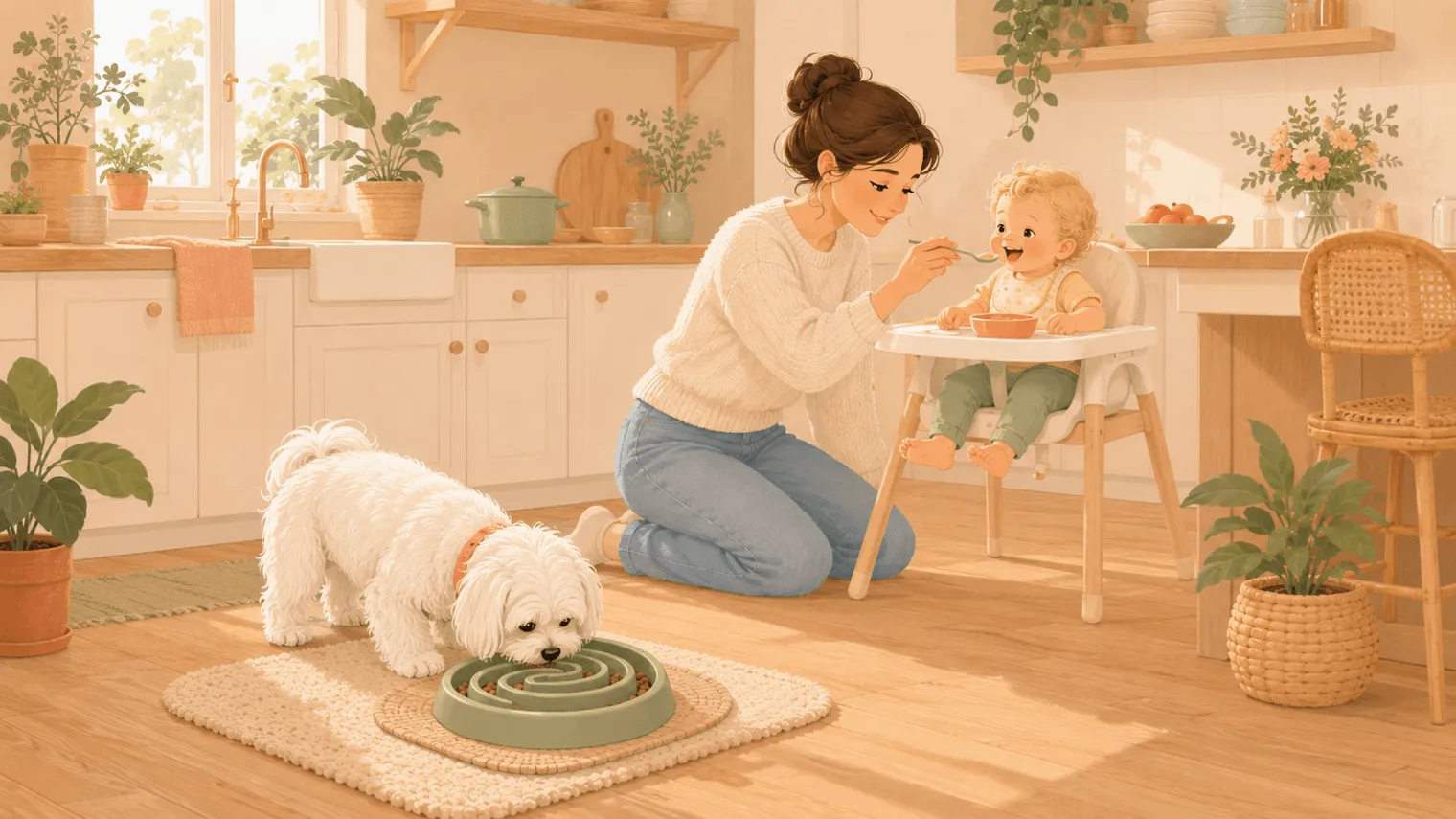
Somewhere in the first month home with a baby, you’ll watch your dog inhale dinner in forty seconds and think: I wish that took longer. Not for the dog’s dignity — for the schedule. Dog mealtime and baby chaos windows overlap with astrological reliability, and a dog that’s busy excavating kibble from a plastic maze is a dog not supervising the diaper change. The Fun Feeder is a ten-dollar plastic maze bowl aimed at gulpers — and at the parent who needs dinner to last a little longer.
We haven’t tested this ourselves — this guide is built from the spec sheet and the patterns across hundreds of owner reviews. Where owners and the spec sheet disagree, we say so.
What it actually changes
The bowl is a plastic spiral maze; kibble falls into the channels; the dog works it out with tongue and nose. Three things follow, and owners report all three consistently:
Time. The headline effect, and the one owners mention most: sub-minute meals commonly stretch to roughly five or ten. In baby-household terms, dog dinner now outlasts a diaper change instead of finishing before the wipes are open.
Air. Gulpers swallow air with kibble, and everyone in the house learns what follows. Slower intake means less of it — and while bloat is a complex, breed-influenced topic for your vet, the AKC points to slow-feeder bowls as a common way to keep dogs from gulping down so much air.
Brain. Every meal becomes a small puzzle. It’s the lazy cousin of the Kong rotation — zero prep, runs twice a day automatically.
What owners consistently like
Owners keep coming back to the value: it’s one of the cheapest behavior upgrades in the dog aisle, and it earns its keep three different ways at once. The slow-down effect is the part they mention first and most — meals that used to vanish in under a minute now run several. Many also note the side benefit they didn’t buy it for: less gulped air, and a dog that gets a little daily brain work without any setup on a morning when there’s no time for setup.
Things to know before you buy
The maze that slows the dog also slows the dishwashing. The most common complaint across owner reviews is cleaning: ridges collect crumbs and film, and a bottle brush or top-rack cycle needs to actually happen — owners widely report that a neglected maze bowl gets gross in corners a sponge can’t reach. Breed matters too: owners with flat-faced dogs report deep mazes and short snouts are a bad pairing, which is why Outward Hound’s shallower patterns exist. Match the maze depth to the snout.
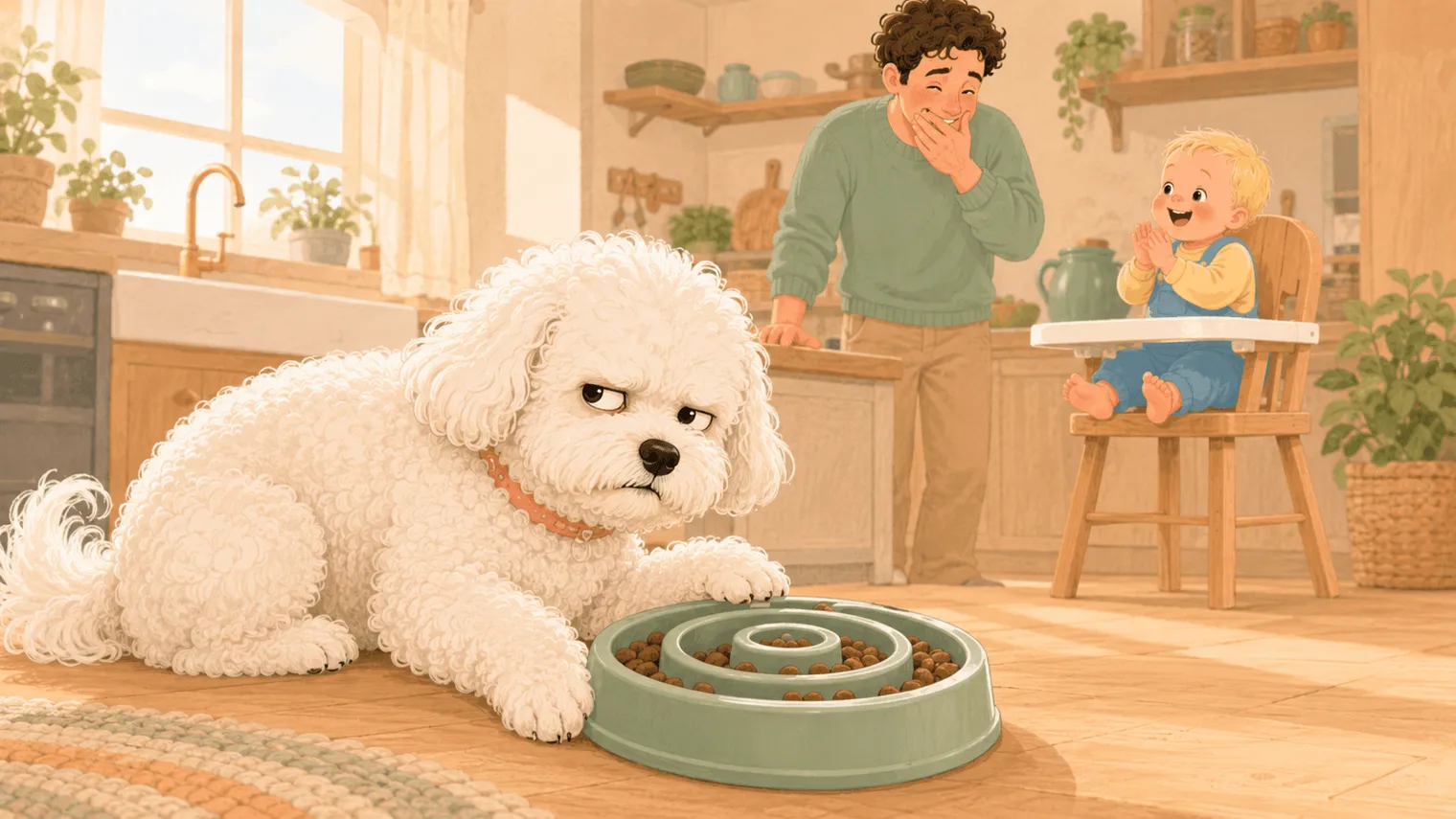
One more note for multi-pet homes: a slow feeder advertises its contents longer. If a resident cat or a second dog patrols mealtimes, run feeding behind a gate — which is the right policy in a baby house anyway.
Put plainly
If you’ve got a gulper and a newborn schedule, owners are glad they bought it: it chips away at a mild medical worry, a behavioral gap, and a scheduling problem with one piece of dishwasher-safe plastic. If you won’t keep up with the bottle brush, or your dog is flat-faced and you grabbed a deep maze, that’s where the friction lives — buy the right depth and a brush, and the rest takes care of itself.
At a glance
Outward Hound Fun Feeder Slo Bowl
What stands out
- Owners consistently report meals stretching from under a minute to 5–10
- Slower eating means less gulped air — owners describe it as cheap insurance against the scarf-and-barf
- Doubles as zero-effort enrichment — owners note dinner becomes a puzzle
Things to know
- Owners say the maze ridges need a brush or top-rack dishwasher run — crumbs hide in corners
- Flat-faced breeds need the shallower designs; owners report deep mazes frustrate short snouts
Questions families actually ask
Why does eating speed even matter?
Speed-eating means gulped air and unchewed kibble, which owners know as the post-dinner urp — and the [American Kennel Club notes](https://www.akc.org/expert-advice/health/bloat-in-dogs/) that fast eaters carry a higher bloat (GDV) risk than slow eaters, especially in deep-chested breeds. A maze bowl is one low-effort way to slow the intake. (For dogs with actual bloat risk factors, that's a vet conversation, not just a bowl purchase.)
Will my dog get frustrated and give up?
Almost never — food is the one puzzle every dog agrees to solve. Owner reviews describe brief week-one indignation, then acceptance. For genuinely struggling dogs (or flat-faced breeds), start with the shallow 'mini ridge' patterns and work up.
How does this fit the new-baby routine?
Beautifully: it stretches dog dinner to roughly the length of a diaper change plus bottle prep, keeps the dog occupied behind its gate during the chaos window, and adds daily brain work for free. It pairs with — not replaces — the lick-mat-and-Kong rotation for longer missions.
Slow feeder vs. puzzle feeder — which one?
Different jobs. The slow feeder is for meals — every meal, zero prep. Puzzle feeders are for enrichment sessions — more engagement, more setup. Most households run the slow feeder at breakfast and dinner and bring out puzzles for the witching hour.