Dog Car Carrier vs. Car Harness: Which Is Right for Your Dog?
Reader-supported — if you buy through our links we may earn a commission, at no extra cost to you. As an Amazon Associate I earn from qualifying purchases. Details
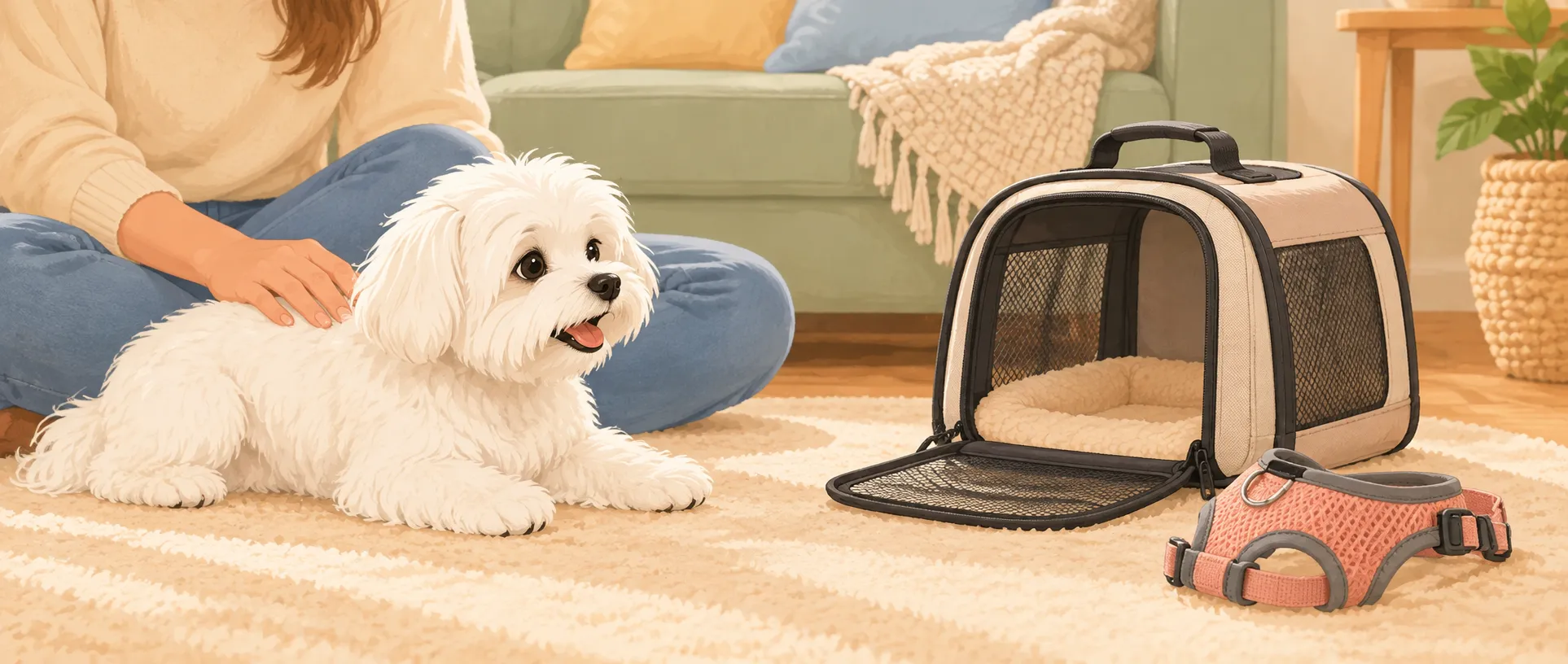
The short answer: A secured carrier encloses a dog that fits inside it; a vehicle harness restrains a dog on a suitable seat. Neither category is automatically better in every crash. Select by the exact product, fit, independently documented test evidence and the way it can be installed in your vehicle.
We haven’t tested these products or conducted crash tests. This guide uses manufacturer documentation and published Center for Pet Safety material.
Fit comes before features
For a carrier, measure your dog and check the maker’s weight and size limits, the animal’s comfort and whether the carrier can be secured in the selected vehicle position. An enclosed format may suit a small dog that is accustomed to the carrier. It is not a fit for a dog that cannot comfortably occupy it or exceeds its limits.
A harness must fit the individual dog’s measurements and be connected exactly as the manufacturer directs. The linked Amazon listing identifies a Clickit Sport in small, Jet Black. Sleepypod also markets a Sport Plus package; we could not verify that the linked listing includes that package’s accessories, so check its contents before purchase. Do not assume the same size fits another dog. Check the current product and vehicle manuals, including whether the required belt path is compatible with your seat.

What crash testing can tell you
“Crash tested” alone does not say whether a product passed a defined standard. Look for the testing organization, protocol, date, exact model, size and configuration. The Center for Pet Safety certified-product directory includes certain Sleepypod products, but listings and current certification status should be checked for the exact model rather than transferred from one generation to another.
CPS’s 2015 carrier study reports results for specific configurations of the Sleepypod Mobile Pet Bed; the study discusses the Handilock accessory. Those test conditions matter and are not proof that every carrier, installation or crash will have the same outcome. Similarly, CPS has published material on the earlier Clickit Sport; do not assume its certification automatically establishes the status of a differently named Sport Plus model. Verify the current exact model and size before buying.
Build a workable family setup
Consult your vehicle manual and the carrier or harness instructions for the allowed seat and attachment. Avoid loose equipment that could interfere with a child restraint, seat belt or airbag. A pet product and a child car seat must each have their own appropriate installation; do not improvise a shared restraint or allow either product to compromise the other.
Introduce a carrier or harness gradually while the vehicle is parked. Make short practice sessions positive, and stop if the dog is distressed. A properly fitted product should not prevent needed breathing or movement as defined by its instructions. Do not leave a dog or child unattended in a vehicle.
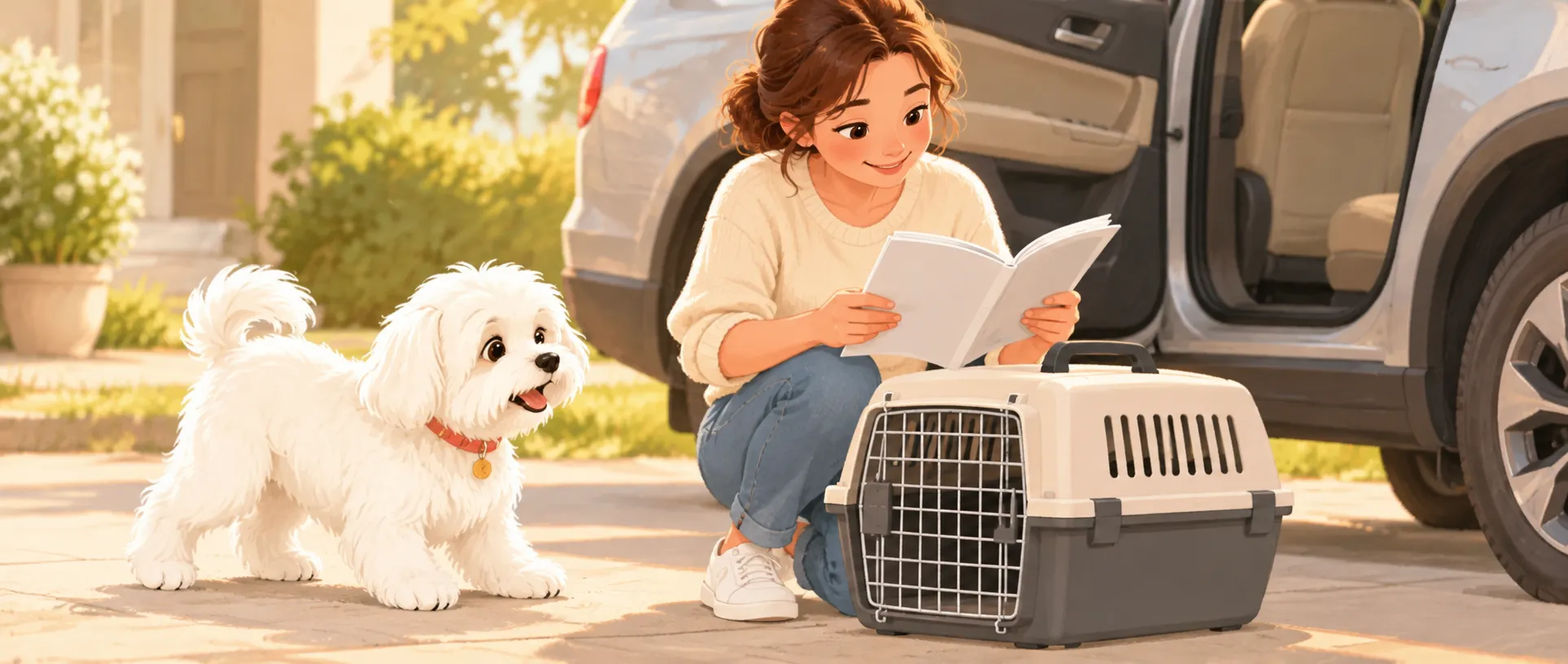
Carrier or harness?
Consider an appropriately sized, correctly secured carrier if the dog fits and can comfortably settle inside it. Consider an appropriately fitted vehicle harness if your dog and vehicle suit the manufacturer’s belt connection. In either case, verify the installation and avoid promises of zero injury in a real collision.
Our small-dog car seat and carrier guide and the CPS certified-product directory provide further context. Recheck the exact model, current test information and accessories before checkout.
What an enclosed carrier changes
A carrier provides an enclosed space as well as a way to position a pet in a vehicle. That can be useful for a small dog that has been introduced to it gradually. Measure the dog using the manufacturer’s guidance and check weight, length and height limits. A pet should be able to use the carrier as the maker intends; a dog that is too large or becomes distressed inside it needs another suitable arrangement.
The vehicle attachment is as important as the carrier’s shape. An unrestrained carrier can move during sudden braking or a crash. Follow the specific carrier’s belt path, accessory requirements and positioning instructions together with the vehicle manual. Do not assume that a generic buckle, an unrelated strap or an attachment from a different generation creates the tested setup.
The linked Sleepypod Mobile Pet Bed is a particular color and model. The CPS study describes specific test conditions and configurations, including discussion of an accessory; read those details rather than treating the existence of a study as a guarantee for every carrier or attachment. Verify the product’s current instructions and the dog’s fit before purchase.
What a harness changes
A vehicle harness leaves the dog outside an enclosure but needs the correct fit and belt connection. The dog’s chest and body measurements, not just a generic label such as “small,” determine whether a size is suitable. Confirm the exact Clickit Sport model and size in the listing and use its current fitting and installation instructions. A harness that is too loose, too tight or connected incorrectly cannot be assumed to perform as intended.
Car harnesses and ordinary walking harnesses are not automatically interchangeable. A convenient leash clip or a strap sold separately does not establish a vehicle restraint’s crash performance. Check whether the maker permits a tether or requires a particular seat belt routing. Avoid adding accessories that change the specified setup without manufacturer guidance.
The CPS harness study illustrates why test evidence matters: different harnesses and configurations produced different outcomes in its historical study. That study should not be treated as a current ranking of every product on the market. Check current product-specific records and understand the tested weight and conditions.
A family car has competing installation needs
The baby’s child restraint must be installed according to its own instructions and the vehicle manual. A pet carrier or harness needs a separate position and an appropriate attachment; it must not share or interfere with the child’s harness, belt path or installation. Check the practical space between the products, access to buckles and whether an adult can install each item without changing the other.
Consider the rest of the load as well. Loose pet supplies, a folded stroller or a heavy bag can move in a sudden stop. Secure cargo using the vehicle manufacturer’s guidance, keep the driver’s view and controls clear, and do not allow a dog to distract the driver. For a long journey, plan stops and avoid leaving a dog or child unattended in the car.
Before a trip, practice with the vehicle parked. Let the dog become familiar with the carrier or harness away from travel stress. If the dog resists the setup, do not force it into a long ride and assume it will adapt; consult a veterinarian or qualified trainer about a gradual introduction and any relevant health concerns.
How to read a test claim
Ask who performed the test, whether it used an independent protocol, which exact size and attachment were tested and what result was reported. The phrase “crash tested” can describe a test without explaining whether the product passed. Certification, a past model’s result and a current marketplace listing are separate facts that must be matched.
No test can reproduce every vehicle, occupant, installation and collision. A passed test is evidence under its stated conditions, not a promise of zero injury. The linked listing says Clickit Sport; confirm the product and its size against the CPS record, and do not assume it includes the accessories in a Sport Plus package. Review current CPS and manufacturer documentation before ordering.
Choose and maintain the setup
Compare the dog’s measurements, the vehicle’s seating and attachment instructions, product availability and the accessories actually included. Inspect the carrier, harness, stitching and hardware as directed before use, and follow the manufacturer’s guidance after damage or a collision. Our affiliate cards lead to specific US variants and may earn a commission; verify the selected size, color and seller before checkout.
Check the purchase details
The linked harness is the small variant, while the carrier must be evaluated against the individual animal’s measurements and the manufacturer’s limits. Check the seller, selected size and included accessories immediately before ordering. If the available listing is unclear about a required vehicle attachment, ask the manufacturer rather than assuming the pictured item includes it. A product’s color or a familiar brand name does not establish that it matches the tested configuration. Review the current return and warranty terms as well.
Sources consulted
CPS certified product directory; CPS carrier study; CPS Clickit Sport record; Sleepypod harness comparison; selected Amazon US listings. Last checked October 29, 2026.
Our picks at a glance
Sleepypod Mobile Pet Bed, Charcoal
What stands out
- Enclosed carrier format for a suitable small pet
- Can be secured according to its vehicle instructions
Things to know
- Size and fit limit the pets it can accommodate
- Installation method and accessories matter
Sleepypod Clickit Sport Harness, Small, Jet Black
What stands out
- Vehicle harness format for a dog that fits the selected size
- Designed to work with vehicle seat belts
Things to know
- Requires a correct fit and installation
- The linked listing is one size and color; check suitability
Questions families actually ask
Is a carrier safer than a harness?
The format alone does not establish crash performance. Compare the exact model, size, test protocol and installation, and select a product suited to the dog and vehicle.
Are all products marked crash-tested independently certified?
No. A crash-tested claim does not by itself identify the test or result. Check the testing organization, precise product, size and configuration.
Can a dog ride on a caregiver’s lap?
An unrestrained dog can distract the driver or become a projectile in a crash. Use a suitable secured setup in accordance with the vehicle and product instructions.
Can the dog share a restraint with a child?
Do not improvise or share a child restraint with a pet. Follow the vehicle and each product’s instructions, and arrange separate appropriate positions.