Best Bully Sticks Odor-Free 6-Inch: A Plain Guide for Dog-and-Baby Homes
Reader-supported — if you buy through our links we may earn a commission, at no extra cost to you. As an Amazon Associate I earn from qualifying purchases. Details
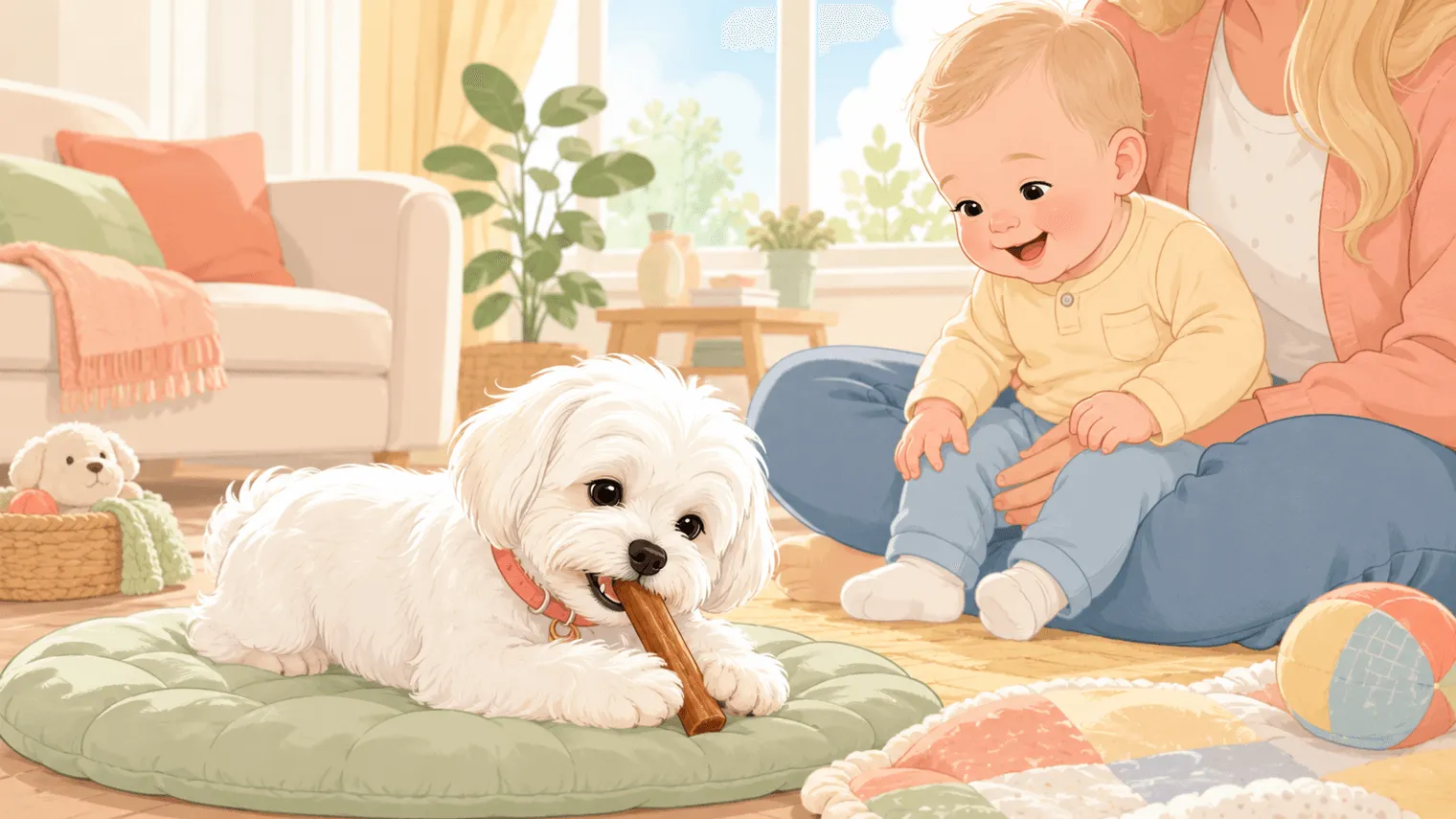
The Best Bully Sticks odor-free 6-inch stick is a single-ingredient beef chew — literally one beef pizzle, baked slow — sold here as a 20-count bulk bag to knock the per-stick price down to around two dollars. It’s aimed at owners who want a long-lasting, digestible chew to keep a dog occupied, without the barnyard smell that cheap bully sticks are infamous for. If you’ve got a dog who needs a job and a nose in the house that notices everything, this is the category built for that.
We haven’t tested this ourselves — this guide is built from the spec sheet and the patterns across thousands of owner reviews. Where owners and the spec sheet disagree, we say so.
What “odor-free” actually means
The whole pitch rides on one process. A bully stick is beef pizzle, and the reason the bargain-bin ones clear a room is that they’re dried fast and cheap. Best Bully Sticks bakes and dehydrates these slowly over a long stretch instead, which is what drives the smell down — no bleach, no chemical deodorizer, just a longer bake. Owners who switched from cheap sticks back this up: the odor-free version has almost no smell for people or dogs, which is the difference between a chew you’ll only hand over in the backyard and one you’ll actually allow on the living-room mat.
The rest of the spec is refreshingly boring, in a good way. The guaranteed analysis lists crude protein at a minimum of 86.4% — this is essentially pure protein — with no rawhide, no grain, and no artificial preservatives, colors, or flavors. Each 6-inch stick runs about 74 calories per the manufacturer’s panel (third-party and vet sources often cite 80-88 for a standard 6-inch), so it’s a real treat, not a freebie. One honest sourcing note per the listing: this bulk-bag SKU is baked and packaged in the USA, but the grass-fed beef itself is sourced from Brazil. So the real difference between Best Bully Sticks lines isn’t where the stick is baked — it’s where the beef comes from. The brand also runs a “USA Baked Chews” collection, though whether a fully USA-sourced-beef version of this exact odor-free stick exists is something we can’t confirm. If the country of origin of the beef matters to you, read the SKU’s sourcing line before you buy rather than assuming.
Why a dog-and-baby home is the use case
Here’s the concrete moment this thing is good at. The baby’s on your hip mid-fuss, the dog is circling because something is happening and he wants in on it, and you need both of them calm for ten minutes. A bully stick is one of the few things that reliably peels the dog off the situation — owners report even determined chewers settle in for 30-plus minutes and then ask for another. That’s a genuinely useful buffer when you physically only have one free hand.

The catch is that it’s a settle tool, not a walk-away babysitter. The end nub — the last two or three inches — is a double hazard in a baby household. It’s a choking or obstruction risk for the dog if he tries to gulp it, and it’s a small, grab-able object on the floor that a crawler will find and route straight to their mouth. Treat that stub as trash the second it gets short: pick it up, throw it out. A bully-stick holder that grips the end helps a lot here, because it makes sure a swallow-sized piece is never left behind on the rug for either mouth in the house.
The third baby-specific thing is hygiene. A half-chewed, slobbery stub is exactly the kind of object a baby who mouths everything is drawn to. Give the stick in one defined spot — a crate or a wipeable mat — store the partly-chewed stick out of the baby’s reach between sessions, and wipe down the floor where the dog was working on it. Contained, it’s fine. Loose in a house with a crawler, it’s a scavenger hunt you didn’t sign up for.
What owners consistently like
The headline in owner reviews is engagement: dogs are, in the reviewers’ words, obsessed, and they stay busy. For a house where the alternative is a bored dog inventing his own entertainment during nap time, that’s the whole point.
Second is the low odor, which comes up constantly from buyers who’d sworn off bully sticks over the smell — the odor-free bake is what got them to give the category another shot indoors. Third, owners and vets both note the digestibility angle: because it’s a single pure-protein chew that breaks down in the stomach, it doesn’t carry the same blockage worry as rawhide, and that’s a big reason owners say they feel okay handing one over. And the practical one: buying the 20-count bulk bag lowers the per-stick cost, which matters a lot given how fast an enthusiastic chewer goes through them. Owners also point to the chewing action scraping tartar at the gumline as a nice bonus — light dental upkeep, category-wide, not a certified claim on this specific SKU.
Things to know before you buy
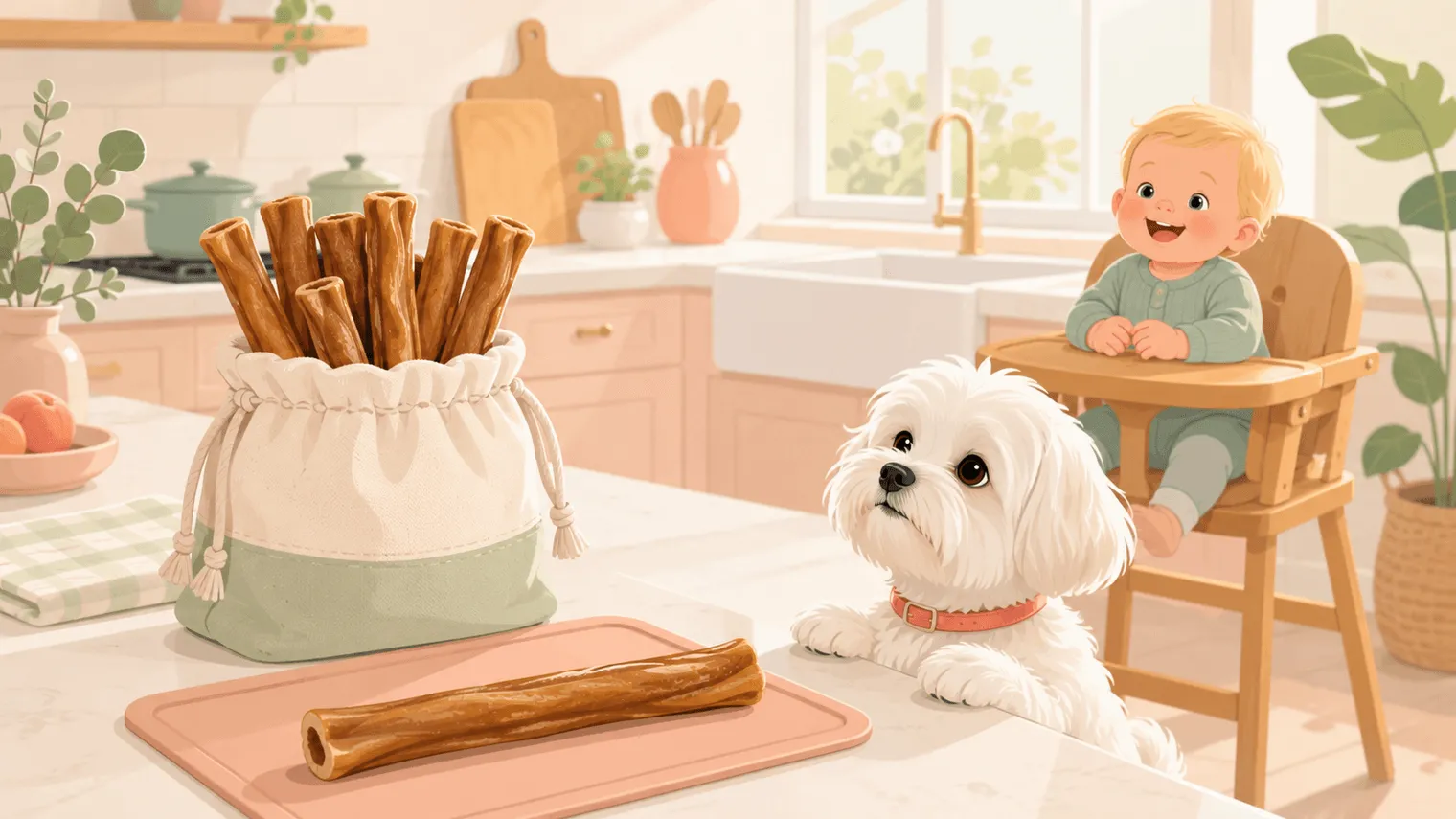
The most common complaint is simple math: with heavy use, this gets pricey. A strong chewer can finish a 6-inch stick in one to two hours, so if you’re free-feeding them the cost climbs fast. The workaround owners land on is the one built into this listing — buy the bulk bag for the lower per-stick price, and reserve sticks for crate time or the moments you specifically need the dog settled, rather than leaving them out as an all-day snack.
The safety caveat, from owners and vets alike, is the end nub. Bully sticks are firm but digestible, so the real hazard isn’t a cracked tooth — it’s the final swallow-sized piece. Supervise, use a holder, and take the stub away and throw it out once it’s down to about two or three inches. Don’t gamble on the dog knowing his own limits on the last gulp.
The third thing is nutrition and behavior. At roughly 74-88 calories each these can push past a dog’s treat allowance, so keep treats to about 10% of daily calories and consider breaking one stick across sessions. And because dogs prize them so highly, a bully stick can trigger resource guarding — give it in a separate room or crate, away from other pets, kids, and hands, so nobody’s reaching toward a dog who’s decided this is the best thing he’s ever owned.
One more honest note on the brand, since it comes up. In 2024 the parent company, TDBBS, voluntarily recalled its Green Tripe treats (sold under the Best Bully Sticks and Barkworthies names) over possible foreign-metal contamination — that recall covered green tripe only, not bully sticks, and the FDA has since terminated it. The odor-free bully sticks themselves have not been subject to a recall. Separately, bully sticks as a category have had Salmonella recalls at other, unrelated companies over the years, which is exactly why single-ingredient sourcing and washing your hands after handling any raw-derived chew are worth doing.
Put plainly
If you want a long-lasting, digestible chew to keep your dog busy and you don’t want your living room smelling like a feedlot, owners are consistently happy with the odor-free version, and the bulk bag is the sensible way to buy it. In a dog-and-baby home, treat it as a supervised settle-the-dog tool with a strict rule about tossing the end nub — not a hands-off babysitter. Manage the calories, give it somewhere contained, and it earns its keep. For other ways to keep a dog occupied without your full attention, a stuffable rubber toy or a durable chew toy pairs well with rotating these in.
At a glance
Best Bully Sticks 6" Odor-Free Bully Sticks (20-Count Bulk Bag)
What stands out
- Owners report it reliably keeps even enthusiastic chewers busy for 30-plus minutes, so it buys a stretch of quiet when your hands are full
- Buyers who switched from cheap pizzles say the odor-free bake really is close to smell-free, so they'll give it indoors — one said the bully love finally became mutual
- Single-ingredient beef that owners and vets note is digestible, unlike rawhide, so it's less likely to cause a blockage
Things to know
- The most common complaint is cost with heavy use — strong chewers can finish a 6-inch stick in 1-2 hours. Workaround: the 20-count bulk bag drops the per-stick price, and reserve sticks for crate time
- Owners and vets flag the last 2-3 inch nub as a choking risk when a dog gulps it. Workaround: supervise, use a bully-stick holder, and toss the stub
- Per the nutrition panel it's high-calorie and high-value, so it can push past the treat allowance and spark resource guarding. Workaround: keep treats under ~10% of daily calories and give it in a separate room
Questions families actually ask
How long does a 6-inch bully stick last?
It depends entirely on the chewer. Aggressive or large-breed dogs may finish a standard 6-inch stick in about 1-2 hours, while small or moderate chewers can stretch one across several sessions over a few days. In a baby house, plan around the shorter end so you're not caught mid-nap-routine with a dog demanding the next one.
Are odor-free bully sticks really less smelly?
Yes, largely — the odor-free sticks are baked and dehydrated longer, so they have almost no smell for humans or dogs versus a cheap natural pizzle. Note that once a stub is wet with saliva it does carry some odor, just far less. That low-smell bake is the main reason owners feel okay giving one indoors near a nursery.
Are bully sticks digestible, or are they like rawhide?
They're a single-ingredient beef chew that's highly digestible and breaks down in the stomach, unlike rawhide, which makes a blockage less likely. That said, a large piece swallowed whole can still be a choking or obstruction risk before it's digested, so the end nub is the part to manage.
Should I give a bully stick when I have to step away with the baby?
Only if you can still glance over — it's a settle-the-dog tool, not an unsupervised babysitter. A single stick can buy 30-plus minutes of quiet, which is genuinely useful when your hands are full, but the choking-nub risk means it needs the same supervision as any edible chew. Give it in a defined spot you can see from where you'll be with the baby.
Can puppies have bully sticks?
Generally yes once they have their adult teeth, around 5-6 months. Start with thinner sticks, keep early sessions to 5-10 minutes, always supervise, and take the stub away before it's small enough to swallow. A teething puppy and a crawling baby on the same floor is a lot of small-object management, so a holder helps.