Amazon Basics 22 x 22 Pee Pads: What the 100-Pack Actually Fits
Reader-supported — if you buy through our links we may earn a commission, at no extra cost to you. As an Amazon Associate I earn from qualifying purchases. Details
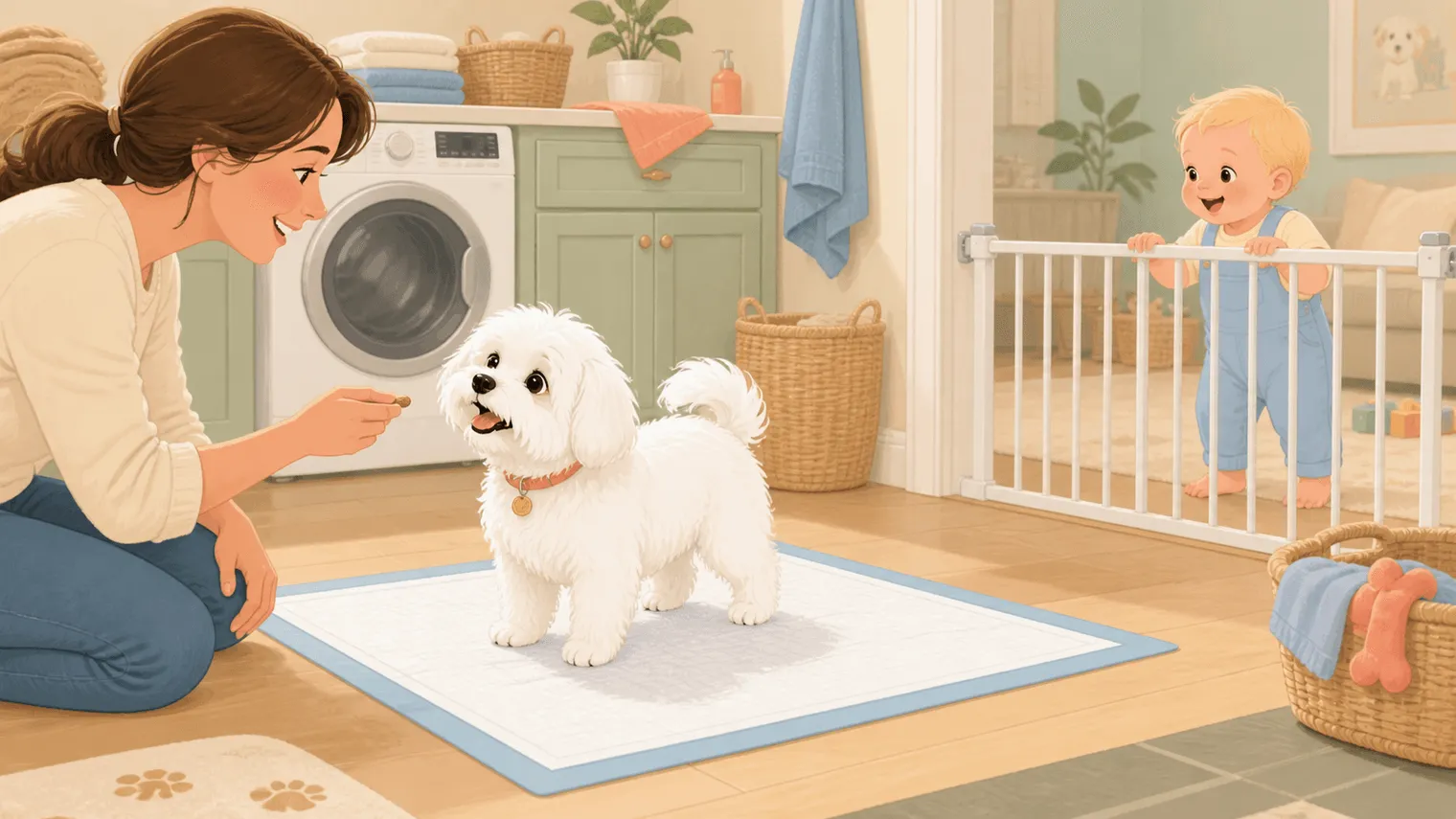
The headline dimension on the Amazon Basics regular pee pad is 22 by 22 inches. The part that absorbs, however, is closer to 19 by 19. That difference explains why this inexpensive 100-pack can work nicely for a Maltese or young puppy yet frustrate owners whose dogs aim near the border.
We have not personally tested this product. This guide is based on Amazon’s exact model documentation, current category data, potty-training guidance, and recurring owner-review patterns. Absorbency varies with a dog’s output and placement, so we do not treat “leak-proof” as an unconditional promise.
Exact model and construction
This article covers model TRP100R, Amazon ASIN B00MW8G62E: regular, standard-absorbency, blue-and-white pads in a pack of 100. Each pad measures 22 by 22 inches overall. Amazon’s documentation gives the absorbent center as approximately 19 by 19 inches, leaving a border of roughly 1.5 inches around the perimeter.
The five-layer structure uses a quick-dry top sheet, absorbent tissue layers, a polymer core that turns liquid into gel, and a plastic backing. A built-in attractant is intended to help direct the dog to the pad. This is the standard version, not Amazon Basics’ XL, carbon, or heavy-duty line.
Third-party Amazon tracking placed this exact ASIN among the category’s highest-volume disposable training pads in mid-2026. The long review history is more useful than the rank: most owners describe dependable value for puppies, toy breeds, and senior-dog backup, while the negative pattern centers on size, saturation, and misses at the edge.
What owners report in daily use
Positive reviews repeatedly mention the plastic backing and gel core holding routine small-dog output without soaking through. Long-term users value the per-pad cost because training and senior care can consume several pads a day. A regular pad is also easier to fit in a laundry corner or low holder than an oversized sheet.
The limitations are equally consistent. A dog that turns in circles, stands with front paws on the pad but urinates off the back, or produces a large volume can overwhelm the 19-inch center. Liquid may not pass through the plastic backing, yet it can still spread to a border and run onto the floor. Some owners need to replace the pad after one use; others report leakage after repeated use or a saturated core.
Dogs may also drag, bunch, or shred a loose pad. If your dog treats the plastic and fluff as a toy, do not leave it unattended. A compatible low tray or pad holder can reduce sliding and keep the border contained, but it does not make the material safe to chew.
Best placement in a home with a baby
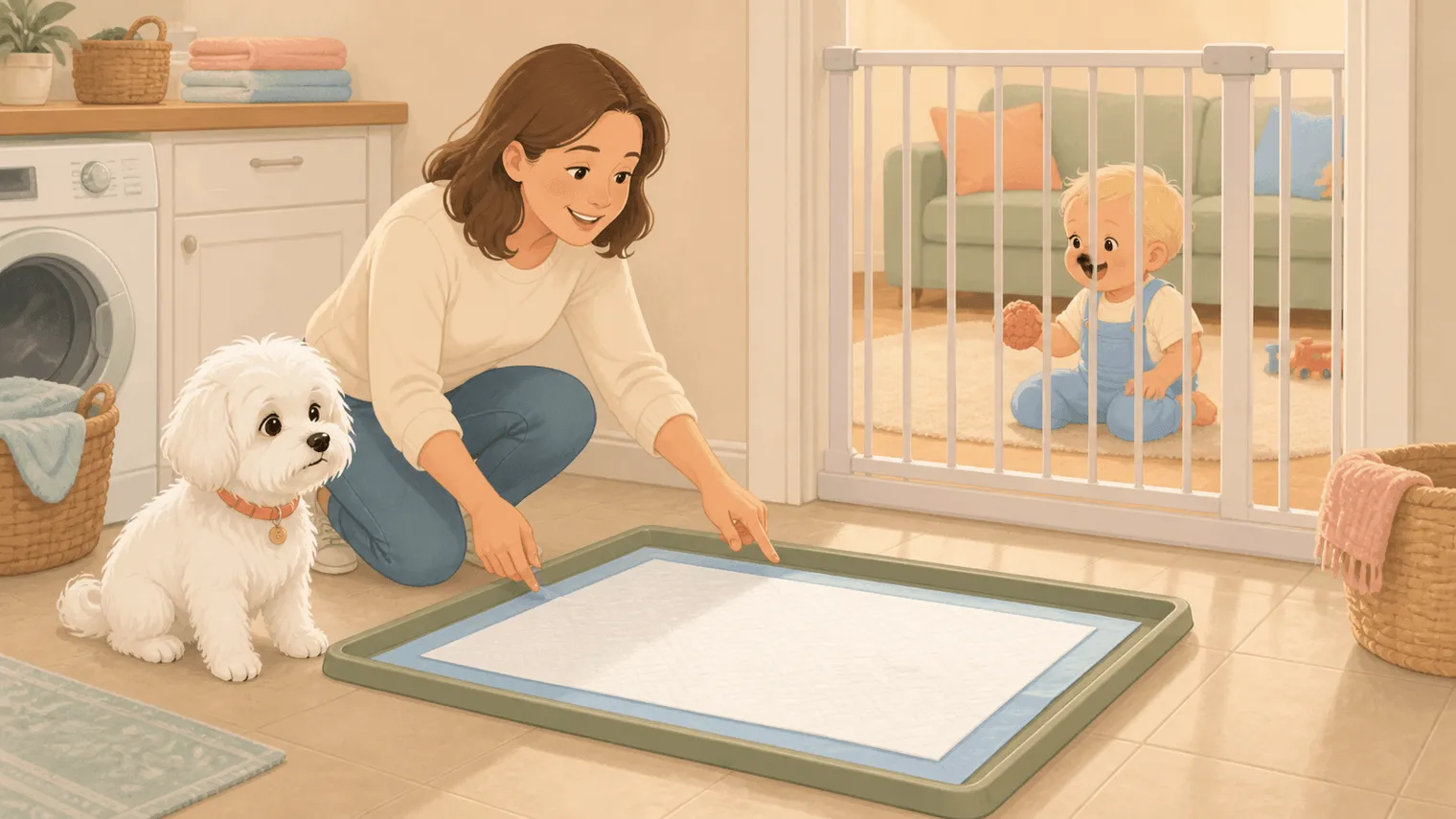
Use one consistent dog-only location with an easy-clean floor. Put the blue plastic side down and white side up, flatten all folds, and leave enough clearance that the dog can step on, turn, and finish without backing into a wall. A gate should prevent the baby from reaching either a clean or used pad.
That separation matters even before the pad is soiled because a crawling child can mouth or tear loose pad material. After use, dog urine or stool can contaminate the pad and nearby surfaces. The CDC advises keeping children away from areas containing dog waste and cleaning indoor dog urine, stool, or vomit promptly. Do not place a pad beside the baby’s changing station, play mat, feeding area, or bath supplies simply because the laundry room serves several purposes.
For training, bring the puppy to the pad frequently and reward promptly after success. The American Kennel Club notes that supervision and a predictable indoor bathroom location are central to pad training. Clean misses with an appropriate odor-destroying cleaner so the surrounding floor does not become the target.
Change frequency and disposal
There is no responsible universal promise such as “one pad lasts all day.” Change it after a bowel movement, when the top remains wet, when urine nears the border, or whenever odor and hygiene require it. Puppies, dogs with urinary problems, and households with a crawling baby usually benefit from faster removal rather than maximizing uses per pad.
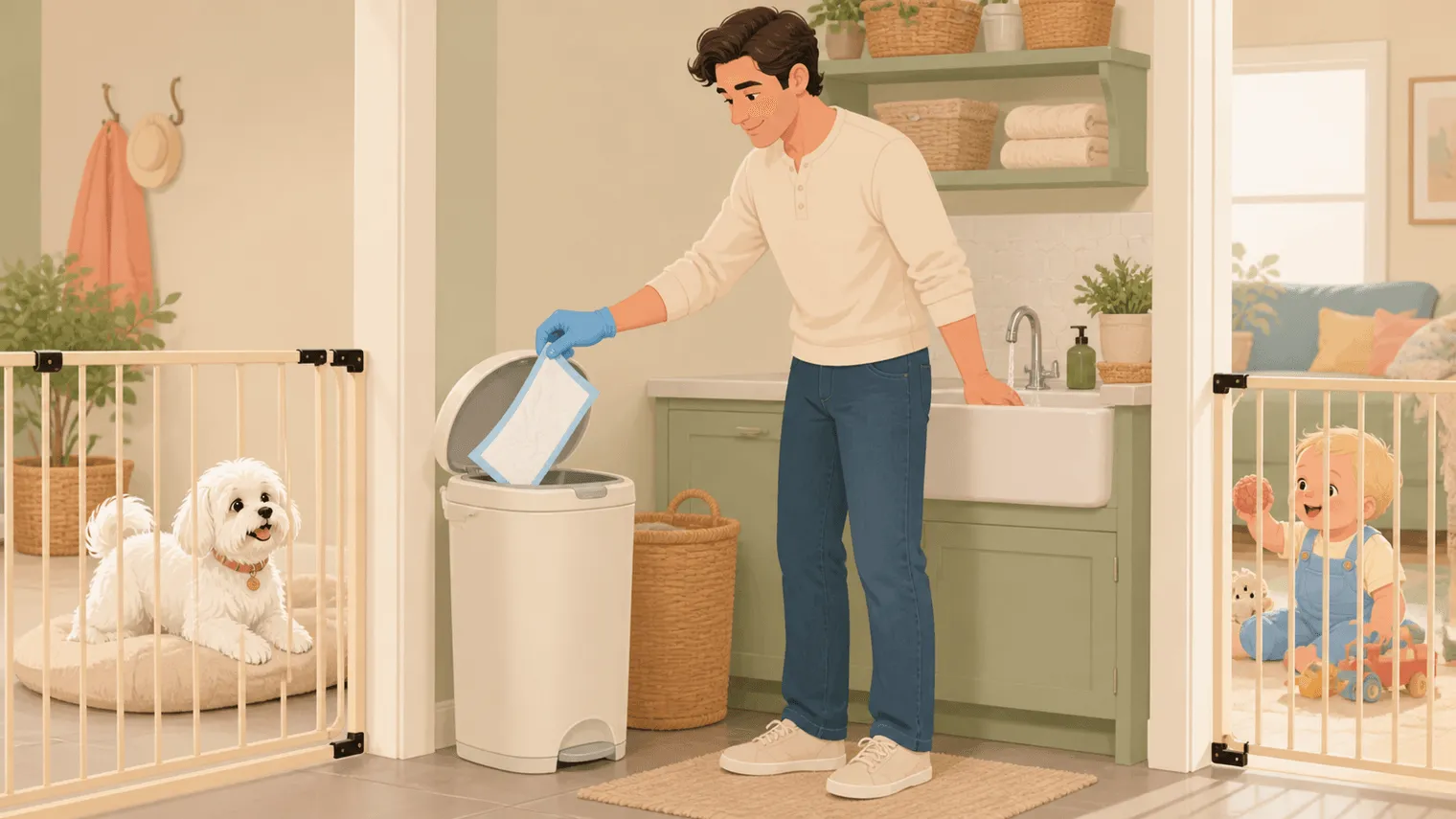
Fold a used pad inward without shaking it, place it directly into a secure lidded pail, and wash with soap and running water. The CDC recommends disposable gloves for indoor dog waste cleanup and thorough handwashing afterward. Keep the fresh stack in its wrapper inside a latched cabinet. If the dog suddenly urinates more often, strains, has blood in urine, or changes house-training behavior, contact a veterinarian rather than solving the symptom by adding more pads.
Who should buy this exact 100-pack
The regular 100-count pack fits small dogs, young puppies, predictable senior-dog accidents, and families that already know a 19-inch absorbent center matches their dog’s stance. It also makes sense as an emergency backup for bad weather or post-procedure confinement when a veterinarian approves the setup.
Choose XL or heavy-duty pads when the dog is larger, urinates heavily, consistently misses the edge, or remains alone long enough to saturate standard absorbency. Consider washable systems only if your laundry and sanitation routine can keep dog waste completely separate from baby items.
The Amazon Basics pad is popular because it is straightforward and inexpensive. The smart purchase decision comes down to measuring the usable center, not being persuaded by the 22-inch outer dimension.
Sources consulted
- Amazon Basics pad-series size and absorbency chart
- Amazon Basics regular pad product manual
- Recent Amazon customer-review snapshot for ASIN B00MW8G62E
- AKC guide to puppy pad and paper training
- Amazon Basics ASIN and category-trend data
- Model TRP100R reference
- CDC guidance for dog waste, indoor cleanup, and handwashing
Specifications and links last verified August 19, 2026.
At a glance
Amazon Basics Regular Dog and Puppy Pee Pads, 100 Count
What stands out
- Low-cost 100-pack for puppies, toy breeds, and light everyday use
- Five-layer design includes a quick-dry surface and plastic backing
- Built-in attractant can support a consistent indoor potty location
Things to know
- The absorbent center is only about 19 by 19 inches
- Standard absorbency can saturate or allow edge misses
- Loose plastic-backed pads must stay away from babies and dogs that shred them
Questions families actually ask
What are the real dimensions of these Amazon Basics pee pads?
The full pad is 22 by 22 inches, but the absorbent center is approximately 19 by 19 inches with a border around it.
Which side faces up?
Place the white absorbent side up and the blue plastic backing down, then flatten the pad completely.
Are the regular pads suitable for large dogs?
They are primarily a regular-size, standard-absorbency option. Larger dogs, heavy output, or dogs that circle before squatting may need an XL or heavy-duty pad.
Can a puppy pad be left where a baby can crawl on it?
No. Keep both clean and used pads inside a dog-only gated zone and dispose of used pads immediately in a secure lidded pail.